Clogged Sink or Shower? How to Clear It Yourself
Shukshuk team
Most sink and shower clogs can be cleared yourself, without calling a plumber, if you follow the right escalation order: from gentle to more aggressive. This guide walks through the steps in order, including two critical safety warnings: never use boiling water (hot only), and never mix chemical drain cleaners.
Tools You Need
Kettle or pot · baking soda + white vinegar · cup plunger (flat-bottom, not the toilet-flange type) · hand snake, 3–5 meters · adjustable wrench or slip-joint pliers · bucket · rubber gloves · old toothbrush · towels.
Steps in Order: From Gentle to Aggressive
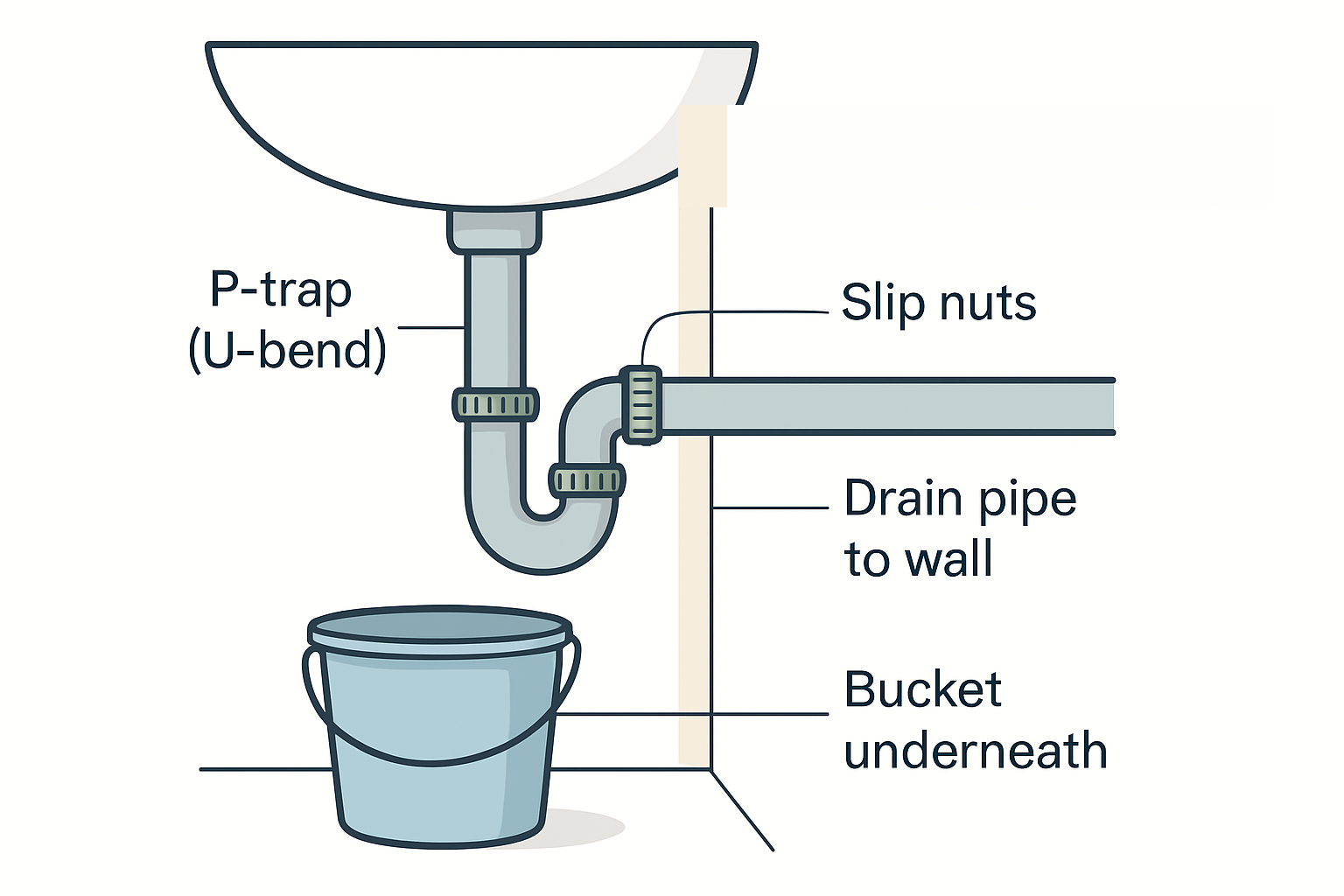
1. Hot-water flush, NOT boiling. Boil a kettle and let it rest 2–3 minutes (it cools to about 60–70°C). Boiling water (100°C) can soften and warp PVC pipes, damage joints and seals, and when there is already a clog, the boiling water gets trapped against the pipe wall, making the damage worse. Pour slowly in 2–3 stages. Boiling water is only safe on all-metal drain lines (rare in modern Israeli apartments). For a kitchen sink with grease, repeat the hot flush weekly as maintenance. 2. Baking soda + vinegar. Remove standing water from the sink → pour ½ cup baking soda into the drain → add 1 cup white vinegar → cover the drain immediately (a stopper or cloth) to direct the fizzing action downward → wait 15–30 minutes → flush with hot (not boiling) water. Gentle and PVC-safe, effective against soap scum and light grease, but not against a solid or hair clog. 3. Cup plunger. Fill the sink with 5–8 cm of hot water to create suction; for bathroom sinks, plug the overflow hole with a wet cloth; seal the plunger tightly over the drain; plunge vigorously for 20–30 seconds; pull off sharply on the last stroke (the reverse suction helps dislodge the clog); repeat up to 3 times. Important: never plunge if a chemical drain cleaner is already in the pipe, splashback can cause chemical burns. 4. Hand snake. Remove the drain cover; feed the cable in while turning clockwise; at resistance, keep rotating to hook or break up the clog; pull back slowly while continuing to turn; flush with hot water. Don't force it, excess pressure can damage older pipes. Wipe the cable clean as you retract it. 5. Clean the P-trap (the U-shaped pipe under the sink), the most common clog spot. Place a bucket under the trap first (it holds standing water) → loosen the two slip nuts counter-clockwise by hand (pliers gently if stuck) → remove and empty the U-section → rinse elsewhere and scrub with an old toothbrush → inspect the adjacent pipes → reattach hand-tight only (overtightening cracks the plastic) → run water for 30–60 seconds and check for drips. If the slip nuts are corroded or seized, stop, don't force them (that cracks pipes), and call a plumber. Bonus: sewage smell from a single unused drain usually just means a dry trap, run water for 30 seconds to refill the seal.
Safety Warnings
Wear rubber gloves throughout, drain water carries bacteria and sometimes caustic chemical residue. Never mix chemical drain cleaners for a clog (or use one right after another): bleach + an acidic cleaner produces chlorine gas; bleach + ammonia produces chloramine gas, both are toxic. If a chemical product was already used, flush heavily with water and wait 30–60 minutes before doing anything else. Ventilate the room whenever a chemical product is involved.
Prevention
Mesh strainers on every drain · never pour grease or oil down the sink (let it cool and bin it) · a weekly hot-water flush of the kitchen drain · brush out hair before showering · prefer liquid soap over bar soap (less scum) · flush only toilet paper, no "flushable" wipes · clean pop-up stoppers periodically.
Stop: Call a Plumber
Multiple fixtures are backed up at once (toilet + shower + sink), or flushing the toilet pushes water up in the shower: a sign of a main-line clog, beyond any DIY tool. Sewage smell from several drains, or sewage visible in a floor drain: an emergency, indicating a main-line or venting failure. The clog returns within 2–3 weeks of clearing, tree roots, pipe damage, or chronic buildup that needs hydro-jetting. Two full DIY rounds have failed, there is zero flow, or you hear gurgling from multiple fixtures at once.
What a Plumber Costs
Clearing a sink or shower drain with a plumber in Israel typically runs ₪300–₪560 (including the call-out fee). That can feel like a lot for a small clog, but a neglected clog can escalate into a main sewer-line failure, which in the US is sometimes priced at $5,000–$15,000 for a full repair (a US data point, not an Israeli one, but it illustrates the gap). Standing water in a slow drain also accelerates bacteria and mold growth and can damage cabinetry. See the full plumber-cost guide below for detailed pricing.
FAQ
Is boiling water okay for a clog?
No. Boiling water (100°C) can soften and warp PVC pipes and damage joints. Boil a kettle and let it rest 2–3 minutes before pouring, that cools it to roughly 60–70°C, which is safe.
How deep should I feed a hand snake?
Feed it in gradually while turning clockwise until you feel resistance, that's usually the clog or a bend in the pipe (often at the P-trap). Don't force it in; keep turning instead of pushing hard, so you don't damage older pipes.
Sources
- Balkan Plumbing, about boiling water and plastic drain pipes
- Paschal, 8 methods to unclog a bathroom sink
- Neighborhood Plumbing & Drain, how to unclog and clean a P-trap
- Washington State Dept. of Health, bleach mixing dangers
- HomeWellFix, when to call a plumber for a drain
- Plumbline Services, 4 signs your main sewer line is clogged
- Roto-Rooter, how to prevent a drain clog

See also
This is a general guide, if you are unsure, or if any of the "Stop" conditions above apply, call a professional and do not continue with DIY.