Classic Shakshuka Recipe: From the Shuk to the Pan
Shukshuk team
We are called Shukshuk, so publishing a shakshuka recipe is practically a legal obligation: in Hebrew it is practically the same word, and the shuk is where this dish starts anyway. This is the classic version: tomatoes from the market, one pan, no shortcuts.
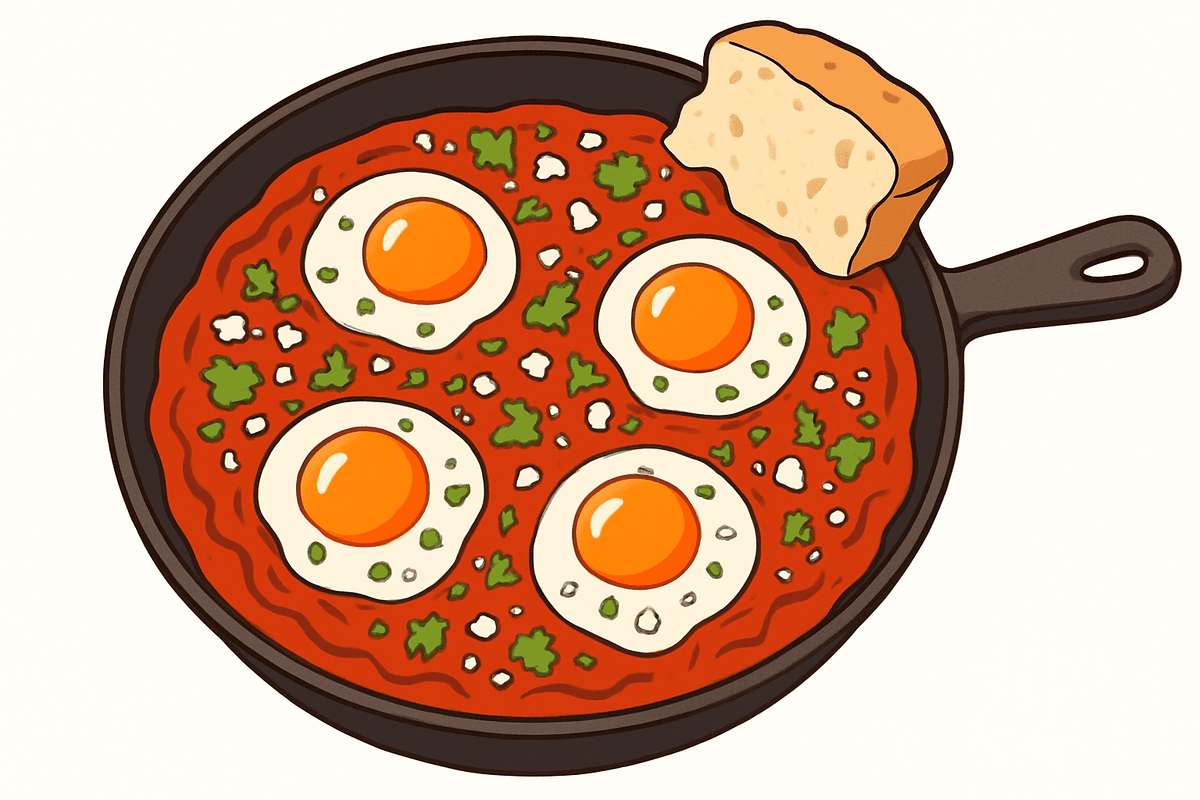
The secret: the sauce
Shakshuka is really a tomato sauce that happens to have eggs in it, which means the whole dish is won or lost before a single egg goes near the pan. Ripe tomatoes from the shuk, grated on a box grater until only the skin is left in your hand, give the fullest flavor: especially in summer, when the tomatoes are genuinely sweet. In winter the logic flips: a good tin of crushed tomatoes beats pale, hard supermarket tomatoes without breaking a sweat, and reaching for it is a sound decision rather than a confession. Both routes are entirely legitimate. What you cannot compromise on is thickness. Cook the sauce patiently until a spoon dragged across the bottom of the pan leaves a trail that closes slowly, that is the moment the eggs can go in and stay where you put them. Too thin, and the sauce simply swallows them, the yolks spread, and you end up with tomato soup with an egg in it. If it is still watery, give it another five minutes uncovered rather than adding flour or cranking the heat.
Variations
Green shakshuka swaps the tomatoes for spinach or chard wilted down with a lot of garlic, with a little cream or labneh pulling it into a sauce: a completely different dish, lighter and herbal. The most common version in Israeli homes is simply crumbled Bulgarian cheese scattered on at the end, melting slightly into the sauce and balancing the acidity; feta does the same job. Meat eaters add merguez sausages: brown them first until they release their red fat, take them out, build the sauce in that same fat, and return them to the pan before the eggs. There is also a roasted-eggplant version, half an eggplant charred over the flame, peeled and chopped into the sauce: which adds a smoky depth and an unusually soft texture.
What to serve with it
Fresh bread is not a serving suggestion here, it is part of the dish: with nothing to dip, you are left with sauce you cannot collect. Slices of challah, a country loaf or a warm pita: whatever you have, as long as it is fresh enough to soak. Alongside it, a simple chopped salad is the right call: tomato and cucumber with lemon and olive oil, nothing clever, because its job is to bring the acidity and the coolness that balance a hot, oily pan. And if you want one more layer, drizzle thinned raw tahini over the shakshuka just before serving. It cools each bite, adds a gentle richness, and mostly makes the pan look like restaurant shakshuka for about ten seconds of effort.
Prep 10 min · Cook 30 min · Serves 2–3
Ingredients
- 3 tbsp olive oil
- 1 large onion, chopped
- 1 red pepper, cut into strips
- 3–4 garlic cloves, sliced
- 1 tsp sweet paprika
- ½ tsp cumin
- Chili or a little hot pepper (optional)
- 800g ripe tomatoes, grated, or one tin of crushed tomatoes
- 1 tbsp tomato paste
- Salt and black pepper
- 4–6 eggs
- Chopped parsley or cilantro
- Bulgarian cheese to crumble over the top (optional)
Instructions
- Heat the olive oil in a wide pan over medium heat and fry the onion for about 5 minutes, until translucent.
- Add the pepper strips and fry for another 5 minutes or so, until they soften.
- Add the garlic, paprika, cumin and chili: fry for about a minute, just until the aroma rises.
- Add the tomatoes and the paste, salt them, and cook over medium-low heat for 15–20 minutes until the sauce thickens. A thin sauce means drowned eggs.
- Taste and adjust the seasoning, the sauce should be seasoned slightly beyond what feels comfortable, because the eggs will soften it.
- Make wells in the sauce and crack the eggs into them. Cover and cook for 5–8 minutes: set whites, soft yolks.
- Scatter the herbs (and the cheese, if you want it) and serve straight from the pan with fresh bread.
FAQ
Can you freeze shakshuka?
The sauce, absolutely: it keeps in the freezer for up to about three months and arguably improves from the rest. The eggs, no. An egg frozen after cooking turns rubbery and watery on thawing, and there is no fixing it. So the right approach is to make a big pot of sauce, freeze it in portions, then reheat a portion in a pan, wait for it to bubble, and crack fresh eggs into it. From there you are eight minutes away from a full meal.
How spicy is shakshuka supposed to be?
Classic Israeli shakshuka is usually not very spicy at all, mild to gently warming, the kind children will eat. The heat is a matter of personal taste rather than fidelity to the recipe: add fresh chili, dried hot pepper or a spoon of harissa at the spice stage, or skip it entirely. What does not change is that the tomatoes are the point. If the heat is covering the taste of the tomatoes and garlic, you have overdone it: better to keep the chili on the side and let everyone add their own at the plate.