Hamster Care: A Complete Guide for New Owners
Shukshuk team
A hamster looks like a small, simple pet, but it comes with especially strict house rules: chief among them, that some types must be housed completely alone. This guide summarizes the basics of hamster care, including what matters for keeping one in Israel.
Cage and Bedding: Room to Dig
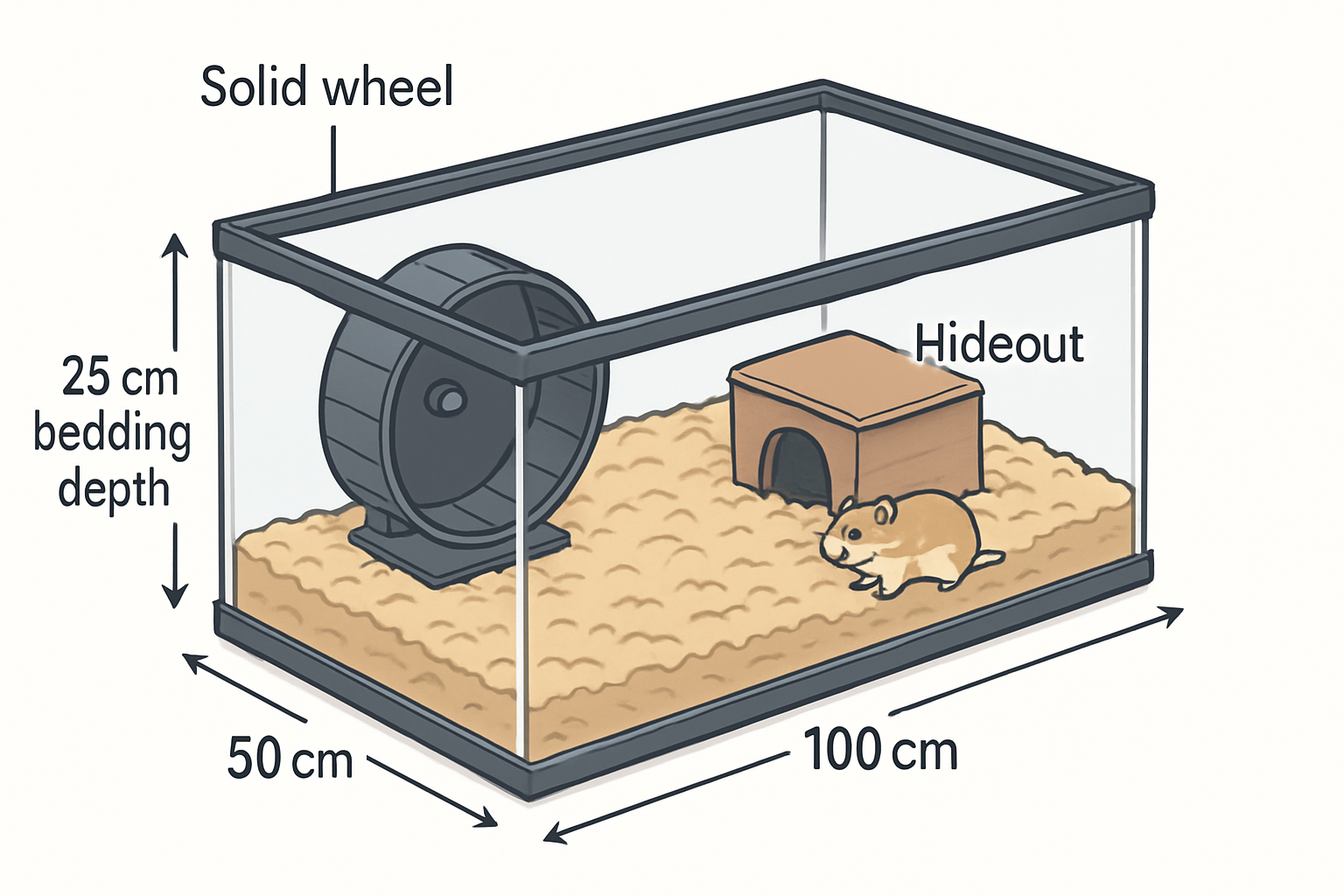
A hamster needs a cage with a solid floor (not wire) of at least around 100×50cm, with roughly 25cm of deep bedding that lets it dig and build tunnels: a natural behavior essential to its wellbeing.
Critical: Housing Alone
Syrian hamsters and Chinese hamsters are naturally solitary and must each be housed alone in a separate cage, adult hamsters of the same species can fight to the death if kept together. Dwarf hamsters may live in pairs or groups when young, but they too tend to become solitary and aggressive past around 6 months of age, and usually need to be separated.
A Pellet-Based Diet
A hamster's basic diet is built around pellets, with a small amount of fresh vegetables added. Avoid feeding based solely on a seed mix, it lets the hamster pick out its favorite bits and miss essential nutrients.
A Wheel and Tunnels
Hamsters need a large exercise wheel with a solid floor (not wire) and tunnels to explore, these provide the physical activity and mental engagement essential to their health.
A Nocturnal Creature: Respect the Sleep Schedule
Hamsters are naturally nocturnal, mostly active in the evening and at night. It's important to respect their sleep schedule and avoid waking them during the day.
Safe Handling, Low to a Surface
Get a hamster used to being handled gradually, and always hold it close to a low surface (such as a table): a fall from height can seriously injure its small, fragile body.
Israel: The Law, Heat and Lifespan
The general 1994 Animal Welfare Law applies in Israel; the 2009 regulations for keeping non-farm animals specifically name Syrian and Siberian hamsters (in the context of shops and sale) and set a minimum sale age of 60 days. A hamster's lifespan is relatively short, only about 2 to 3 years. Hamsters are very heat-sensitive; keep the cage in a ventilated, cool spot away from direct sun, and never expose them to the extreme heat of an Israeli summer. A common mistake is keeping two Syrian or Chinese hamsters together thinking they'll "work it out", this can lead to violent fights; another is a seed-only diet.
FAQ
Can you keep two Syrian hamsters in the same cage?
No, Syrian hamsters (and Chinese hamsters too) are solitary and must each be housed alone in a separate cage; housing them together can lead to violent fights.
What about dwarf hamsters?
They may live in pairs or groups when young, but usually become solitary and aggressive past around 6 months of age and need to be separated.
What's a hamster's expected lifespan?
Only about 2 to 3 years, significantly shorter than most other pets, and worth considering before adopting.