How to Sell a Used Electric Bike in Israel: Price, Battery Checks and the ID Plate
Shukshuk team · Updated September 2026
Two things decide what you get for a used electric bike, and only one of them is visible: the state of the battery, and how much the buyer trusts you. The battery is the most expensive part of the bike, replacing it runs into thousands of shekels, and an experienced buyer prices it first and the frame and motor second. This guide covers valuing it honestly, demonstrating the battery is sound rather than promising it is, what you must do with your identification plate before handing the bike over, and how not to get caught in the transaction.
What moves the price of a used e-bike, from Israeli market listings, September 2026
- Effect on price
- The strongest single factor
- Why
- Over 3 years is treated as suspect even with low mileage
- Effect on price
- Raises it substantially
- Why
- A replacement battery costs about ₪1,500 to ₪2,500
- Effect on price
- Drops it sharply
- Why
- The buyer has to source one and prices accordingly
- Effect on price
- Raises it
- Why
- Proves provenance and makes trust easier
- Effect on price
- Moderate
- Why
- Cheap to fix, but signals how it was looked after
- Effect on price
- Relatively low
- Why
- Buyers forgive looks, not batteries
| Factor | Effect on price | Why |
|---|---|---|
| Battery age | The strongest single factor | Over 3 years is treated as suspect even with low mileage |
| Sound replacement battery | Raises it substantially | A replacement battery costs about ₪1,500 to ₪2,500 |
| No battery at all | Drops it sharply | The buyer has to source one and prices accordingly |
| Original charger and receipt | Raises it | Proves provenance and makes trust easier |
| Brakes and tyres | Moderate | Cheap to fix, but signals how it was looked after |
| Scratches and frame wear | Relatively low | Buyers forgive looks, not batteries |
A common range for a sound used e-bike is roughly ₪1,000 to ₪2,000, but the spread is wide by model, age and battery. Price against active listings for the same model, not against what you paid.
First: the identification plate does not go with the bike
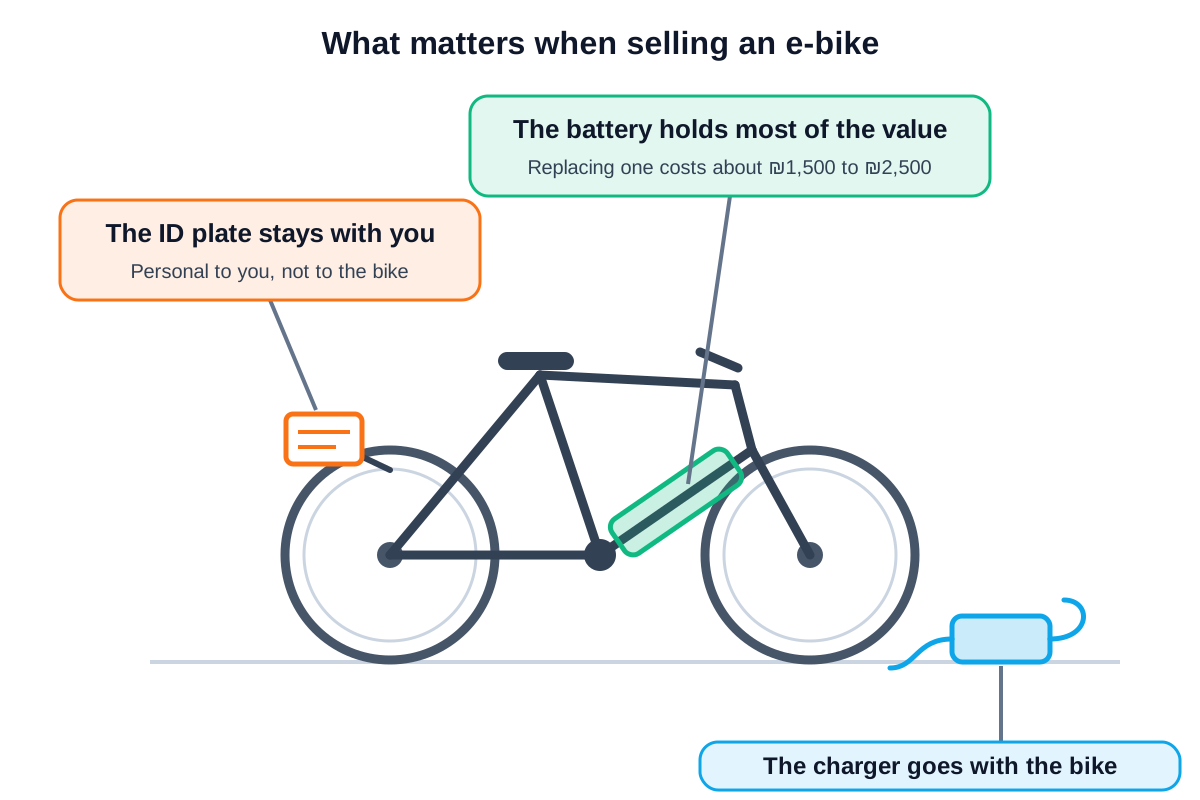
This is what surprises sellers most, and it works nothing like a car. In Israel, owners of electric bikes and scooters must register in the licensing authority database and fit an identification plate. Registration opened in February 2024 and the plate obligation took effect later that year. But unlike a car number plate, this number belongs to the person, not the vehicle: it moves with you from one vehicle to another, and it does not pass from one person to another. What that means when you sell: • Remove the plate before handing the bike over. It is yours, and it goes on your next vehicle. • The buyer registers themselves and gets their own number. You are not "transferring ownership" of the number, and there is no transfer form as there is for a car. • A seller who leaves the plate on the bike leaves a number registered in their own name on a vehicle they no longer own. That is exactly the position you do not want to be in if the bike is later involved in an offence or a crash. Tell the buyer up front that the plate comes off and that they need to register their own. It avoids an argument at handover and signals that you know what you are doing. Registration is done online through the Ministry of Transport site or in person at a licensing office.
The battery is the whole game
A buyer who knows what they are doing asks about the battery before they ask about the model, because it is the most expensive part and the only one that degrades even when the bike is not ridden. A good replacement battery costs about ₪1,500 to ₪2,500, so a tired battery takes roughly the cost of replacing it off your price. What a buyer actually judges: • Age. A battery over three years old is treated as suspect for accelerated wear, even if "it was barely ridden". A battery that sat unused degrades too. • Behaviour under load. Not what the display shows at rest, but how fast the percentage falls while riding. • Provenance. A manufacturer original, or a recognised replacement, is worth more than an unbranded pack. And how to demonstrate rather than promise it: turn up to the meeting with the battery fully charged, and give the buyer a test ride long enough for the percentage to move. A seller who arrives with a half-empty battery saying "it is excellent" takes a discount, because there is no way to check. That is the highest-return advice in this guide: it costs nothing and it changes the price. If the battery genuinely is weak, say so in the listing. A buyer who discovers it themselves on the test ride knocks the price down or walks; a buyer who knew in advance arrives priced correctly.
Selling without a battery: when it makes sense
It sounds odd, but "electric bike without a battery" is a common search in its own right and it has a market. The reasons: a pack that died completely, a battery kept for another bike, or a seller who would rather not sell a battery they are unsure about. Buyers look for these to pair with a pack they already own, for parts, or to pay less and fit a new battery themselves. If that is your situation, put it in the title, not in the last line of the description. A listing that says "no battery" filters out the people who would be disappointed and reaches exactly the people looking for it. Realistic pricing is the bike minus the cost of a new battery, sometimes a little more if the frame and motor are in good shape. What not to do: post a lithium battery by mail or ordinary courier. Shipping lithium batteries is restricted, and a damaged pack is a real fire risk. Hand it over in person.
What buyers check, and so what to prepare
Have these ready and the sale moves faster: • The original charger. A missing charger is an immediate argument about price. • A visible frame or serial number, photographed in the listing. This is what separates a credible listing from a suspicious one, because e-bike theft is common. • A receipt or proof of purchase if you have one. Not required, but it lifts the price. • Brakes and tyres. A cheap fix that heads off haggling. • Motor noise. The buyer will listen on the test ride; if there is a noise you know about, say so first. • Compliance. A legal e-bike in Israel is up to 250 watts with motor assistance to 25 km/h, per the standard. A bike that has been "speed unlocked" is not legal to ride on the road, and serious buyers are put off by it. Do not market it as a feature.
Photographs and a listing that sells
Six daylight photographs do more than any wording: the whole bike from both sides, the display, the battery in place, the charger, the serial number, and a close-up of a spot that is scratched. Showing one small flaw raises trust in everything else. In the description, four things buyers look for that are usually missing: the year of purchase, the age of the battery separately from that (it may have been replaced), the real range in kilometres as you experience it today rather than the catalogue figure, and whether the plate comes off (it does, always). Price: check active listings for the same model in the same area, not what you paid three years ago. E-bikes lose value quickly in the first two years and then settle around the state of the battery.
Closing the deal without getting caught
• Meet somewhere public and well lit, preferably in daylight. • Test rides: hold something of the buyer's, or go with them. E-bikes disappear on test rides, and it does happen. • Payment: cash, or a transfer that has actually landed and is visible in your account before you hand the bike over. A screenshot of a transfer confirmation is not money. • Note the serial number and the handover date for yourself, and keep the messages. • Take the plate off before handing it over, as above. And if you are the buyer: ask to see identification matching the seller's name, check the serial number is not blurred or filed off, and be suspicious of a price far below the market. A price too good to be true usually means a stolen bike, and the buyer of a stolen bike ends up with neither the bike nor the money.
FAQ
Does the identification plate transfer to the buyer when I sell my e-bike?
No. Unlike a car, the registration number for electric bikes and scooters belongs to the person: it moves with you from one vehicle to another, but never from one person to another. Take the plate off before handover and keep it, and the buyer registers themselves for their own number. Confirm the current procedure on the Ministry of Transport site.
What is a used electric bike worth?
A common range for a sound bike is about ₪1,000 to ₪2,000 as of September 2026, but the spread is wide and the battery decides it: a replacement costs roughly ₪1,500 to ₪2,500, so a tired battery takes about that off the price. Price against active listings for the same model in your area.
How do I prove the battery is in good condition?
Arrive with it fully charged and give a test ride long enough to see how fast the percentage falls under load. That is worth more than any claim and costs nothing. A battery over three years old is treated as suspect even if the bike was barely ridden.
Can I sell an electric bike without the battery?
Yes, there is a real market: buyers want them for parts, to pair with a battery they already have, or to fit a new pack. Put "no battery" in the title rather than at the end of the description, and price it as the bike minus the cost of a new battery. Do not post a lithium battery, hand it over in person.
What makes an electric bike illegal in Israel?
Exceeding the standard: a legal e-bike is up to 250 watts with motor assistance to 25 km/h. A bike modified for higher speed is not legal to ride on the road. Riders also need to be 16 or over, to have passed a competence or theory test, to wear a helmet at any age, and to be registered with an identification plate.
Sources

See also
Prices are September 2026 market ranges, not a quote. Registration, plate and standards rules are updated from time to time, and the binding wording is the one on the Ministry of Transport and National Road Safety Authority sites: check there before selling or buying.