How to Sell Old Gold and Jewellery in Israel: What a Gram Is Worth Today, Who Buys, and What Not to Sell by Weight
Shukshuk team · Updated September 2026
A chain you never wear, a ring from an engagement that ended, one earring of a pair. Gold is the only thing in the house with a world price at every moment, and yet most people walk into a gold buyer without knowing what is in their pocket, and walk out with whatever was offered. This guide reverses the order: first check what is actually gold and at what karat, do the arithmetic that gives the ceiling (the metal value at today's world price), understand who buys and what each of them pays, what happens at the counter and how much may be paid in cash, what about tax, and where the line runs between a piece you sell by weight and a piece worth more than the gold in it, which you sell in a listing instead. The figures are correct for the morning of 19.9.2026 and the sources are at the bottom of the page.
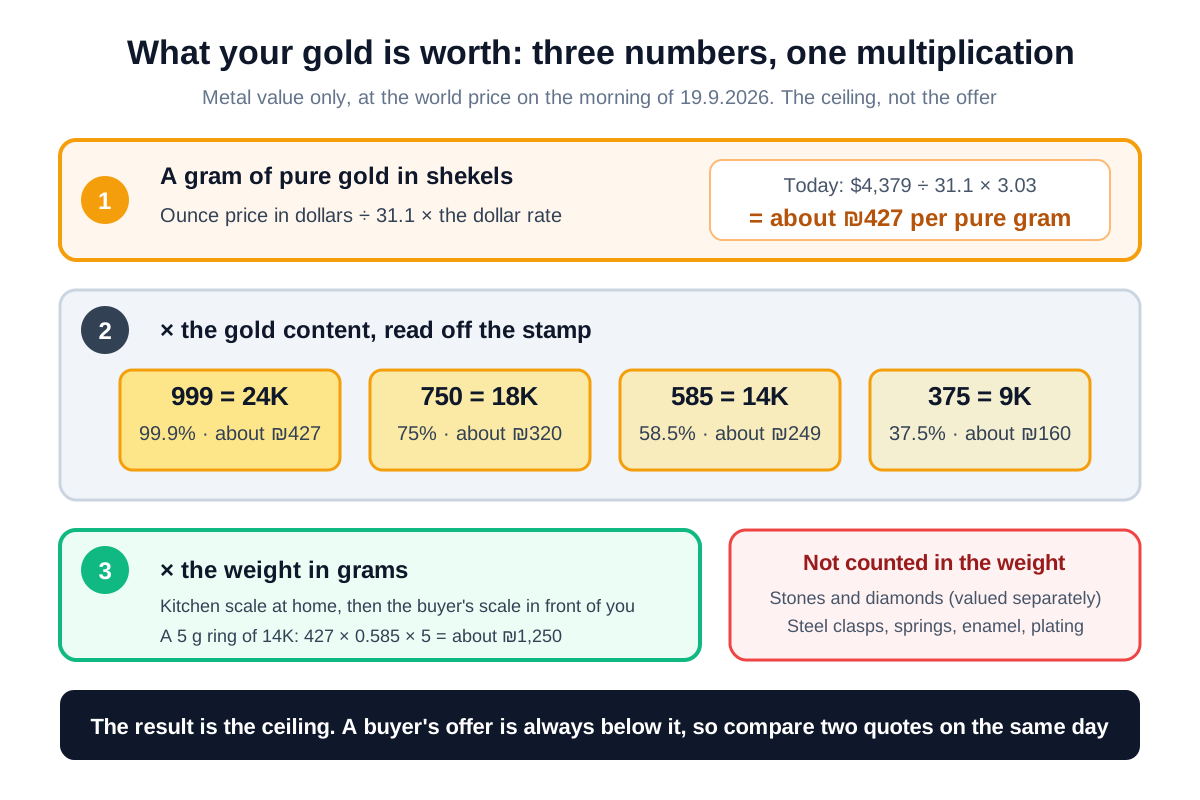
Metal value only, per gram, by karat. As of the morning of 19.9.2026: ounce $4,379, ₪3.03 to the dollar
- Stamp
- 999
- Gold content
- 99.9%
- Metal value per gram
- about ₪427
- Stamp
- 916
- Gold content
- 91.6%
- Metal value per gram
- about ₪391
- Stamp
- 750
- Gold content
- 75%
- Metal value per gram
- about ₪320
- Stamp
- 585
- Gold content
- 58.5%
- Metal value per gram
- about ₪249
- Stamp
- 375
- Gold content
- 37.5%
- Metal value per gram
- about ₪160
| Karat | Stamp | Gold content | Metal value per gram |
|---|---|---|---|
| 24K | 999 | 99.9% | about ₪427 |
| 22K | 916 | 91.6% | about ₪391 |
| 18K | 750 | 75% | about ₪320 |
| 14K | 585 | 58.5% | about ₪249 |
| 9K | 375 | 37.5% | about ₪160 |
This is the ceiling, not the offer: a gold buyer pays less than the metal value, and the gap is their margin. No buyer publishes the percentage, so get two quotes on the same day. The world price moves daily; recompute with today's rate before you leave the house (formula below).
Step 0: what is gold, at what karat, and what only looks like gold
Start with a magnifier (or the phone camera zoomed in) and find the stamp: inside a ring, next to the clasp of a chain or bracelet, on the back of a pendant or earring. The number is the gold content in thousandths: 750 is 18 karat (75% gold), 585 is 14 karat (58.5%), 916 is 22 karat, 999 is pure gold, and 375 is 9 karat. Sometimes the karat itself is written ("14K", "18K") instead of thousandths. In Israel 14 karat is the most common. A piece made in or imported into Israel should carry three marks, per the Standards Institute: the maker's or importer's mark (usually initials), the purity mark, and the institute's authentication mark, shaped like a lyre (kinor David). The Israeli standard for marking gold articles (SI 299) is an official standard, and a piece weighing under two grams is exempt from the institute mark. An old piece, a piece bought abroad, or one whose stamp wore off in a repair can be real gold with no mark; it only gets a lower opening offer until the buyer tests it, which is fine, because the buyer tests anyway. What only looks like gold: letters next to the number, such as GP (plated), GF or RGP (gold filled), HGE, or a fraction like "1/20 12K", mean a thin layer of gold over another metal, with a metal value near zero. "925" is silver, not gold, even when it is gold-coloured (gilded silver). And a magnet: gold is not attracted to a magnet, so a piece that sticks is not gold, but a piece that does not stick is still not necessarily gold, because brass and copper do not stick either. Sort into three piles: gold with a clear stamp (known karat), gold probably without a stamp, and what is probably plated. The first pile is the one you can price at home.
The arithmetic: ounce, dollar rate, karat, weight
The metal value of every gold piece derives from one number: the price of an ounce of gold in dollars on the world market. An ounce is 31.1 grams, so: Price of a gram of pure gold in shekels = ounce price in dollars ÷ 31.1 × the dollar rate. Metal value of the piece = pure-gram price × gold content (0.75 for 18 karat, 0.585 for 14 karat) × weight in grams. Today's example (19.9.2026): ounce $4,379, ₪3.03 to the dollar, so a pure gram is about ₪427. A 14-karat ring weighing 5 grams: 427 × 0.585 × 5 = about ₪1,250 of metal. An 18-karat chain of 12 grams: 427 × 0.75 × 12 = about ₪3,840. Two Israeli price pages checked the same morning reached the same figures within a shekel (sources below), so the arithmetic can be trusted; what changes is the ounce price and the dollar rate, which is why you redo it on the day you sell. Weigh at home: a digital kitchen scale that shows single grams is enough for a range (a thin ring weighs 2 to 4 grams, a signet ring 8 to 15, a chain 5 to 30). At the buyer, the weighing is on precise calibrated scales, in front of your eyes; if you weighed 12 and their scale says 9, ask why before going on. Deduct what is not gold: stones, steel clasps, clasp springs, enamel and parts of other materials do not enter a gold buyer's calculation, and the buyers' own pages say so. A ring with a large stone can weigh 6 grams of which only 4 are gold. If the stone is a diamond, it is handled separately (see "What not to sell by weight"). The result is the ceiling: what the metal is worth on the exchange, not what anyone will pay for it. The buyer has to make a margin, refine, and carry the risk of a moving price; the offer is always below the ceiling, and only its distance from the ceiling is what you compare between buyers.
Who buys, and what each of them pays
A gold buyer (a metal dealer). Pays for grams and karat only, and does not care whether it is an ugly ring or a broken chain: everything goes to the melt. This is the route for broken gold, for pieces with no design or sentimental value, and for anyone who wants money today. The offer is the metal value minus the dealer's margin, and nobody publishes that percentage; different buyers offer different prices for the same gold on the same day. So: phone first and ask "how much are you paying per gram of 14 karat today", get at least two quotes, and compare them with the ceiling you computed. The Bourse district in Ramat Gan has a concentration of buyers within walking distance of each other, which is convenient for comparing on the same morning; buyers also operate in Jerusalem, Haifa, Beersheba and Netanya, and the ones near you are compared the same way. A jewellery shop. Many jewellers and shops buy old gold or set it off against a new purchase (trade-in). When set off, you usually get more than in cash, because the shop also earns on the new piece; a good route for anyone who wanted to buy anyway. A private sale in a listing. The only way to get more than the metal value, and it applies only to pieces someone would want to wear: a branded or designer piece, fine handwork, an engagement ring with a diamond, a gold watch, an antique piece. The private buyer pays for the piece, not for the grams, and on shukshuk the listing is free (link below). Pricing and staying safe are in the private-sale section. An auction house. For signed, antique or luxury-brand pieces and for complete sets; slow and with a commission, but it reaches buyers who pay for rarity. A pawn loan (a loan against the gold). This is not a sale: you leave the gold, take a loan, and pay interest until you redeem it. For someone who wants the piece back, not for someone who wants to be rid of it.
At the gold buyer's counter: what happens, and what to check
The usual order: items are sorted by karat, each group is weighed on the scales, purity is tested (an XRF device that reads the metal composition without harming the piece, or an acid test on a small scratch in a hidden spot), stones and non-gold parts are deducted from the weight, and a price per gram is offered for each karat. All of it should happen in front of your eyes, and you may ask to see the scale display and the test result. What to bring: the arithmetic you did at home (weight and karat of each item and its metal value), an ID (registered buyers identify the seller, and that is a good sign, not a bad one), and the per-gram price you were quoted by phone. If the counter price differs from the phone price, that is a reason to leave. What to ask: how much per gram for each karat today, whether the price is before or after deducting stones and clasps, and whether there is a fee or deduction beyond that. A quote is not binding, and you are allowed to take your gold and come back tomorrow. Payment: under the law for reducing the use of cash, a transaction between a private person and a business is limited in cash to ₪6,000 (the ceiling was updated on 1.8.2022; the buyers' own pages note that above the permitted amount payment is by transfer or cheque). For a larger sum you get a bank transfer, and you ask for a receipt itemising weight, karat and price per gram. "Cash with no receipt for a large sum" is exactly what the law was written to prevent, and a buyer's problem that has become yours. What not to do: do not leave the gold "for testing" and walk out, do not accept one price for the whole pile without a breakdown by karat, and do not sell on a day you did not do the arithmetic.
Tax: a private sale of personal jewellery
The rule as stated by the tax firms that have written on the subject: a piece that was yours for personal use is "movables for personal use", which are excluded from the definition of an "asset" in section 88 of the Income Tax Ordinance, so selling them is not a capital-gains event. A 2012 circular by Artzi, Hiba, Cohen applied the same principle to gold coins and bars held for personal use, with the caveat that every case is examined on its facts by quantity, frequency and holding period; and a Capitax publication notes that the Tax Authority's capital-declaration form has a field (78) for jewellery, gold, coins and antiques as part of the taxpayer's personal movables. When it is taxable: someone who buys and sells gold regularly, in the quantities and frequency of a business, reports business income or an occasional transaction under section 2 of the Ordinance, and there the tax follows the brackets. Jewellery you inherited and sold once is not that. VAT: a private person charges no VAT and issues no invoice. When a business buys gold from a private person, the business handles the VAT (a self-invoice under regulation 6z of the VAT regulations, as a 2021 article by adv. Keren Marciano explains), and for you it does not change the sum. This describes the rule; it is not advice. Anyone selling large sums, a complex inheritance, or gold bought as an investment asks a tax adviser first.
A private sale: for the piece worth more than the gold in it
When it applies: when someone would want to wear the piece as it is. A brand or designer name, handwork, a good stone, a working gold watch, a matching set, or simply a beautiful piece in good condition. Broken gold, a thin generic chain and a plain ring with no stone gain nothing from a listing, because the private buyer can compute the metal value exactly as you can. Pricing: the floor is the metal value (the arithmetic above), because below it you are better off at a gold buyer. The ceiling is what a similar piece costs new in a shop, and between the two you place yourself by brand, condition, and whether there is a receipt, a certificate or an appraisal. A branded piece with its box and receipt sells closer to the ceiling; a beautiful piece with no history closer to the floor. The listing: karat and stamp (with a macro photo of the stamp), weight in grams, brand or designer if any, ring size or chain length, condition in plain words ("light scratches, clasp works"), and any receipt, certificate or appraisal. Photos on a plain background in daylight, flaws included. A listing that says "14 karat, 6.2 grams" gets serious enquiries; a listing that says "real gold" gets questions. Safety: gold is the smallest and most valuable thing sold second-hand, so the rules are stricter than for a sofa. Meet in a public, well-lit place, ideally at a bank branch or at a jeweller who agrees to test, and not at home. The payment lands in your account before the piece changes hands (an immediate transfer in front of you; between two private persons the legal cash ceiling is ₪15,000). Do not post gold "and the buyer pays on arrival", do not accept a cheque, and do not let the buyer take the piece "to show his wife". Anyone who will not accept those terms was not going to buy.
What not to sell by weight
A gold buyer pays for metal, so anything whose value comes from elsewhere loses out there: - Gold coins. A coin has a metal value and sometimes a collector value far above it; a rare coin that was melted is a loss that does not come back. Identify first, in our guide to coin values (link below). - Diamonds and gemstones. A gold buyer does not pay for them, or pays little; a diamond of a size that carries a certificate is valued separately by an appraiser or a diamond dealer, and only then do you decide whether to sell the ring whole in a listing or to separate them. - Signed, antique and branded pieces. The gold is the cheap part of them; a listing, an antiques dealer or an auction house. - Working gold watches. The movement and the brand are worth more than the case. - Heirlooms with a story. Not because of the money, but because melting is irreversible. If you sell anyway, photograph and document first. The rule: if the answer to "would someone want to wear this as it is" is yes, do not sell by weight.
FAQ
How much is a gram of 14-karat gold worth today?
As of the morning of 19.9.2026, the metal value of a gram of 14 karat is about ₪249 (a pure gram at about ₪427 × 0.585), from an ounce at $4,379 and a rate of ₪3.03. That is the ceiling; a gold buyer pays less. The price changes daily, so recompute on the day you sell: ounce price ÷ 31.1 × dollar rate × gold content × weight.
What percentage of the gold price does a gold buyer pay?
No buyer publishes it, and different buyers offer different prices for the same gold on the same day, so we will not give a number. The method: compute the metal value at home, phone at least two buyers and ask "how much per gram of 14 karat today", and compare the offers with the ceiling. The offer is always below the ceiling; only the distance varies.
How do I know whether a piece is real gold?
Look for a stamp: 750 (18 karat), 585 (14 karat), 916, 999 or 375, and on an Israeli-made piece also a maker's mark and the Standards Institute's lyre-shaped mark (exempt under two grams). Letters such as GP, GF, HGE or a fraction like 1/20 mean plating; 925 is silver. A piece that sticks to a magnet is not gold. Without a stamp the piece can still be gold, and the buyer tests it by XRF or acid in front of you.
Is there tax on selling gold jewellery?
Per the tax firms' publications on the subject, jewellery that was for your personal use is "movables for personal use" outside the definition of an "asset" in section 88 of the Ordinance, and a one-off sale is not a capital-gains event; a private person charges no VAT. Someone trading gold at the frequency and volume of a business reports it as income. Large sums, an inheritance or gold bought as an investment: ask a tax adviser.
How much may I receive in cash for gold?
Under the law for reducing the use of cash (ceilings from 1.8.2022), a transaction with a business such as a gold buyer is limited in cash to ₪6,000, above which payment is by transfer or cheque; between two private persons the ceiling is ₪15,000. In every case ask for a receipt with weight, karat and price per gram.
Does a gold buyer pay for the diamond in the ring?
Usually not, or little: the buyers' own pages state that stones, clasps and non-gold parts are not included in the calculation. A diamond of a size that carries a certificate is valued separately by an appraiser or a diamond dealer, and then you decide whether to sell the ring whole in a listing, separate them, or sell only the gold.
Sources
- Louisa Jewelry, today's gold price by karat (as of 19/09/2026 08:55: ounce $4,379, ₪13,275.94)
- Talupa, gold price per gram in Israel by karat (2026-09-19, ₪3.03 to the dollar)
- Standards Institution of Israel, what to check before buying jewellery (SI 299, the three marks, exemption under 2 grams)
- Birkat Zahav, gold stamps and marking identification (999 / 916 / 750 / 585 / 375)
- Gold4Cash, selling old gold (stones and clasps not counted; cash up to the legal limit)
- Invoice4u, the cash law: a comprehensive guide (₪6,000 with a business, ₪15,000 between private persons)
- Artzi, Hiba, Cohen, tax alert 467: the gold triangle, is it taxable? (2012, section 88, movables for personal use)
- Capitax, sale of an antique bowl: occasional transaction or personal movables (field 78 of the capital declaration)
- Adv. Keren Marciano, VAT aspects of trading in used gold jewellery (12.7.2021, regulation 6z)

See also
The gold prices in this guide are the metal value at the world price on the morning of 19.9.2026 and change daily; they are not any buyer's offer. The tax section describes the rule as it appears in tax firms' publications and is not tax advice; the cash ceilings and the marking standard were read from the sources listed and may change. This guide is not a valuation of any particular piece.