How to Sell Second-Hand Clothes in Israel: What You Actually Get, Where to Sell, and What Is Not Worth It
Shukshuk team · Updated September 2026
Most of the clothes in your wardrobe are not worth money, and that is the starting point that saves the most time rather than a discouraging one. A used item typically sells for a third of its original price or less, so a shirt that cost ₪80 will not repay an hour of photographing and messaging. What is worth it: brand pieces, sought-after sizes, children's clothes in good condition, and anything barely worn. This guide covers deciding what to sell, where, at what price, and when to stop and donate instead.
Four ways to sell used clothes in Israel, as of September 2026
- What you get
- The most: the whole price
- Effort
- High: photos, listing, messages, meeting
- What you get
- A share of the sale, only once it sells
- Effort
- Low: drop off and wait
- What you get
- A small fixed sum per item
- Effort
- Lowest: you leave with cash
- What you get
- A voucher, often ₪30 to ₪100
- Effort
- Low, but the money returns to that shop
| Route | What you get | Effort |
|---|---|---|
| Direct to a buyer | The most: the whole price | High: photos, listing, messages, meeting |
| Consignment in a shop | A share of the sale, only once it sells | Low: drop off and wait |
| A shop that buys outright | A small fixed sum per item | Lowest: you leave with cash |
| Store credit at a chain | A voucher, often ₪30 to ₪100 | Low, but the money returns to that shop |
The more money you get, the more work it takes. The right question is not "who pays best" but "what is my time worth on this particular item".
First: what is actually worth selling
The rule that prevents most disappointment: if a second-hand shop would not take it, a listing will not sell it either. What sells well: recognised brands, barely-worn items still carrying the tag, coats and winter clothing, occasion dresses, shoes in good condition, and children's and baby clothes (children outgrow things fast, so the items are nearly new and demand is steady). What almost never sells: cheap basics, anything stained, stretched, bobbled or smelling, underwear, and whatever was fashionable for exactly one season. The simplest test: if you would hesitate to hand the item to a friend, do not try to sell it. It belongs in donation or textile recycling, not because it is worthless but because your time is worth more than the outcome.
Four routes, and what each really pays
• Direct to a buyer (a marketplace, a group): you keep the full price and pay no commission, but the work is yours — photographing, writing, answering messages, meeting. Worth it for anything above a few tens of shekels. • Consignment: you leave the item with a second-hand shop and they pay you an agreed share only after it sells. If it does not sell you get nothing, and you will usually have to collect it by a set date. Agree three things in writing before leaving anything: the percentage, what happens to unsold items, and how soon you are paid. • A shop that buys outright: a small fixed sum per item regardless of what it eventually sells for. Less money, but you leave with it and carry no risk. • Store credit at a fashion chain: some chains take clothes and issue a voucher worth a few tens of shekels per item. That is not quite a sale, since the money returns to that same shop. Most people combine: sell the best three items directly and hand over the rest in one pile.
Pricing: the rule of thumb, and why to drop it fast
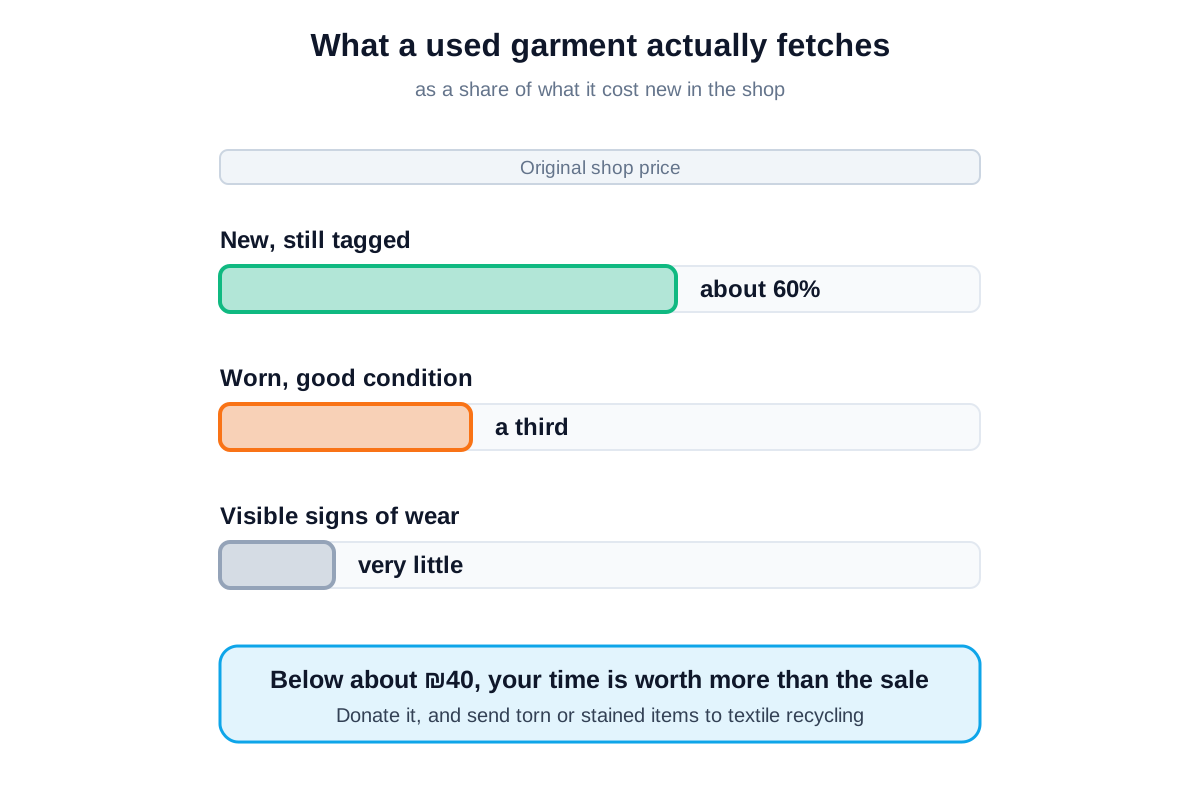
The usual starting point: brand new with the tag, around 60 percent of the original price. Worn but in good condition, a third of the original or less. Visible signs of wear, less again, and often not worth the trouble. Two common pricing mistakes: pricing by what you paid (the buyer does not care), and pricing against a smart second-hand boutique (they are selling curation and presentation, not only the garment). And the advice that is hardest to accept: better to sell cheaply and quickly than to hold it for another six months. A fashion item loses value every season that passes, and a wardrobe full of things that are "worth more than that" is, in practice, just a full wardrobe. If two weeks pass with not a single enquiry, the price is too high. Cut it by 20 percent, not 5.
Photographs: the cheapest part with the biggest effect
This is what separates a listing people stop at from one they scroll past, and it costs nothing. • Daylight, near a window, flash off. Flash flattens the fabric and shifts the colour. • A clean, plain background, preferably light. If the item itself is white or shiny, use a dark one instead. • Iron or steam it first. A single crease in the photo reads as a neglected garment. • Several angles: the whole item, a close-up of the fabric, the label with size and brand, and a close-up of any flaw. • Worn, or laid out flat — not heaped on a chair. Photographing the flaw is not against your interest. A buyer who sees a small mark and comes anyway will not cancel at the meeting or spring a discount on you.
What to write in the listing
Four details buyers look for that are usually missing, each of which saves a round of questions: • The size, and also measurements in centimetres. "M" is relative; length, chest width and waist prevent returns and disappointment. • Brand and model if there is one. That is what people type into the search box. • The condition honestly, including what is not perfect. • Whether you post it or hand it over in person, and from which area. One small tip worth money: write the brand name in both English and Hebrew if it is known both ways. People search in both.
When to just donate
If an item is worth less than ₪30 to ₪40, selling it will probably cost you more in time than you get back. The same goes for a large pile of basics: nobody buys them one at a time, and selling them together brings in almost nothing. In those cases donating is the correct decision rather than a consolation prize: the garment reaches someone who needs it instead of sitting in the wardrobe for another year. Israel has collection points for clothing donation and textile recycling, and we have mapped them in a separate guide. What not to do: donate torn, stained or worn-out items. Charities spend money sorting and disposing of what they cannot pass on, so anything you would not give a friend belongs in textile recycling, not a donation bin.
FAQ
How much money can you get for second-hand clothes?
A rule of thumb as of September 2026: new with the tag, about 60 percent of the original price; used but in good condition, a third or less. In second-hand shops the real range runs from a few shekels for baby items up to thousands for a rare luxury piece. Most ordinary clothes sit at the bottom of that range.
What is consignment and what should I check?
An arrangement where the shop pays you a share of the sale only once the item actually sells, rather than buying it from you upfront. Before leaving items, agree three things in writing: your percentage, what happens to unsold items and who collects them, and how soon you are paid.
Which clothes are easiest to sell?
Recognised brands, barely-worn items still carrying the tag, coats and winter clothing, occasion dresses, shoes in good condition, and children's and baby clothes. Demand for children's clothing is steady because children outgrow things quickly, so the items are nearly new.
How should I photograph clothes so they sell?
In daylight near a window with the flash off, on a plain light background (or dark if the item is white), after ironing or steaming, from several angles: the whole item, a close-up of the fabric, the label, and a close-up of any flaw. Photographing the flaw actually helps, because it prevents cancellations and surprise discounts at the meeting.
When is donating better than selling?
When the item is worth less than ₪30 to ₪40, or when it is a pile of basics nobody will buy separately. But torn or stained items should not be donated at all: they cost charities money to sort and dispose of, and belong in textile recycling.
Sources

See also
Ranges and percentages were collected in September 2026 from Israeli sellers and guides and are not a binding price list. Consignment terms, percentages and credit vary from shop to shop: agree them in writing before leaving any items.